

For many years I worked at nonprofits and trade associations seeking sponsorships. Now I am on the receiving end of those requests, and often it looks very different from the sponsor side. Below are a few tips to help organizations seeking sponsor dollars.
Know someone: Several times a month I get a call or e-mail out of the blue asking my law firm to sponsor the XYZ gala. My response is that all our charitable donations and virtually all our sponsor dollars go to organizations that are connected to the firm in some way: someone here already volunteers, is on the board or has benefited from the organization. Any time you spend cold-calling companies perceived to have deep pockets would be better spent working with your board and top volunteers to identify corporate connections. If they don’t have any, spend the time working on pursuing board members who do.
Make your value clear and provide a call to action: If you’re asking us to sponsor your organization or event “as a great marketing opportunity,” show me the money. Who is the audience? How many and what type of people will receive an invitation? How many people will attend? How many impressions will my ad or logo receive? If you are making a pitch based on the good work you do, tell me how the money will spent. “Your sponsorship allows us to provide meals for X people, save X animals, purchase a lifesaving piece of equipment, etc.” The best pieces offer an incentive to sign up by a certain date: “Send your sponsorship by June 11 in order for your logo to appear on the invitation.”
Think about the people behind the check: Often multiple people are involved in corporate sponsorships, from the person who wants to sponsor an event or organization, to the person who authorizes the expense to the person who produces materials/provides information. The best marketing pieces speak to all these audiences.
Deliver what you promise: When it says “You will be recognized in all promotions,” that means I expect, realistically or not, regardless of the level of my sponsorship, to see my company’s name or logo on EVERY mention of the event. This rarely is true. Think about what you’re actually going to give at each level of sponsorship. If you say we’ll get an attendee list, send it to me—don’t make me ask. Paying for the sponsorship and making sure we get the most out of it is my job. Fulfilling the terms of the sponsorship is yours.
Make it easy:
- Have a clear sign-up form: Do you want the name of the company that will be published, or the name of the person you should contact with questions? To whom should the check be written, and where should we send it? Specify the information you need and what you’ll use it for.
- Include your ad specs: Include these on your sponsor form. How big? How tall? How wide? (Do not assume it’s obvious—nothing is more irritating that having to reformat an ad because it should have been vertical rather than horizontal.) Black and white or color? Jpeg or PDF? What’s the deadline? Include a contact for questions, and make sure that someone at the organization can answer these questions. Many organizations get a volunteer to design or print the program—make sure this person provides you with all the necessary details. Post this info on your website. A good example of this is the Glen Echo Park Partnership sponsorship form:
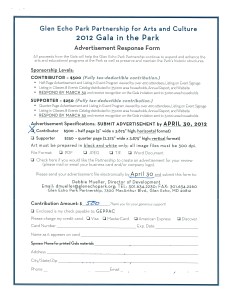

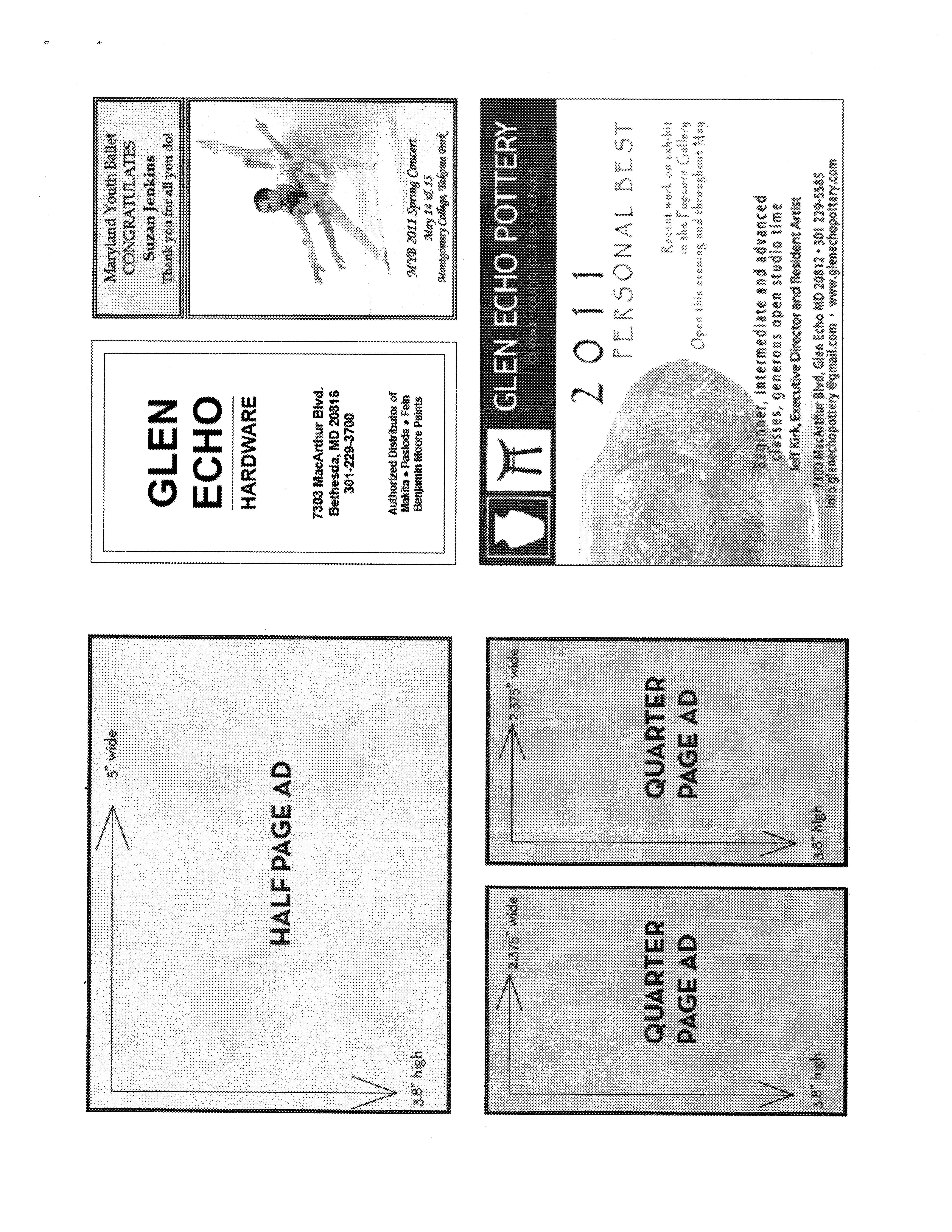
- Publish a calendar for the year: We are a corporate sponsor for Adventist HealthCare, which means we are listed as a sponsor of various subsidiary organizations and events throughout the year. At the beginning of each year, Teresa Witt sends a form listing all the events, what our benefit for each is (ad, tickets, etc.) and the due dates for logos, ads, attendee names, etc.
- Send a spreadsheet for attendees: When you’re including tables as part of a sponsorship, make it easy on both of us. Linda Ekizian or Marie Kushlis from the Montgomery County Chamber of Commerce sends a spreadsheet for us to fill out that asks for the name (full and badge nickname) and company affiliation of each attendee, as well as a space for what we want the table to be called. I don’t have to register 10 people individually, they can cut and paste the info—it’s a win-win.
Remind us: Nothing is worse than an e-mail saying “We need this tomorrow.” Send timely reminders about when you need attendee names or ads. Speaking of Teresa at Adventist, even though she’s sent all the dates way in advance, she checks with us before each event to make sure we’re aware of the deadlines.
Show me: After the event, send a copy of the promotional material or ad. It’s best if you send the whole program or at the least the part that features us. Sponsors don’t always attend events, so it’s always in your best interest to send a copy for the company’s records.
Say thanks: Virtually all organizations say “Thank you to our sponsors” at the event. Stand out by doing more. Dave Feldman of Bethesda Green sent a letter noting he was sorry I couldn’t attend, but offering to host a tour to show me what our firm’s support is making possible. Lauren Conte of The Children’s Inn at NIH sent a short handwritten note (a real standout) thanking us for our sponsorship.
Prepare for the future: After the event, reach out to your sponsors to get their feedback about what they liked and how you could improve. Then the next time you reach out to a potential sponsor, you can say, “We listened, and here’s what we have to offer.”
 annecore.com